Next week, Martha Stewart Living will begin testing a paid download model on its website, marthastewart.com, to allow consumers to view and listen to online segments of Martha Stewart Living Television, The Martha Stewart Show and Martha Stewart Living Radio not currently archived on the Web.
"It has to happen," Martha said at a panel discussion in New York City last week held by investment-banking firm DeSilva & Phillips. "We will see monetization on the Web."
Details about pricing for the offering have yet to be worked out, but it's an experiment for the company aimed at finding new ways to generate additional revenue online from archival video content. Its Web site will still largely remain a free, ad-supported venture.
The company will launch the test using a platform from iAmplify that allows publishers to set up complex business rules like creating subscriptions and bundling multiple products from individual pieces of audio and video. iAmplify runs branded pages within its customers' sites that facilitate online transactions and can also be used for additional advertising.
"All the focus for online video and audio has been on the ad model, but now the ad market is down in this economy and media companies are looking for ways to monetize and leverage their content through other means," said Murray Hidary, chief executive with iAmplify. "Certain online content should be free, but premium content - really valuable content where so much production and effort has been put into it - should be charged for."
-Wall Street Journal

5.18.2009

5.13.2009
The Lovely Lilac
When I was a child, each visit to my grandparents' house during the spring months involved at least a few hours playing in the long lilac hedge that grew on the eastern bank of her backyard. My brother and I would always end up amid the heady blooms and crawl up into the open spaces between the branches where we'd dream up imaginary worlds, new characters to inhabit and new stories to act out. Under the dangling purple blossoms, we'd lose ourselves in time and dreams.
 Lilacs were first brought to North America by the Dutch and American settlers.
 In this bouquet, Martha's arranged a grouping of three different varieties to create a magenta spectrum.
 Highland Park, above, in Rochester was developed by philanthropist Barry Ezwagner, who donated the 20-acre space to the county in 1888. Roughly ten years later the first lilacs began to bloom and the first annual Lilac Festival was held at the park, which is populated by dozens of fragrant lilac trees. Every year it attracts thousands of visitors, including one Martha Stewart. I imagine getting drunk on the perfume....
 Martha planted an allee of lilac hedges leading to the tennis courts on her Bedford property. The varieties include both common and rare specimens, including several Korean examples.
 The lavender shades of Martha's lilacs catch the brilliant springtime sun.
In fact, lilacs hold a place of continued discussion - and some discord - in our family. My grandmother loved to grow them and had at least 15 trees in her backyard, plus one large one at the front. She would not, however, cut the blossoms for arrangements indoors, believing her mother's old superstition that having cut lilacs indoors brings bad luck. She never tempted fate and denied herself the beautiful display and sweet fragrance of cut lilacs on the living room coffee table. My father, a great lover of trees, resists the common lilacs the way he resists cologne. He finds their fragrance too heavy and dislikes their looks when they are not in bloom, which is most of the time: "Just a plain, weedy-looking tree," he concludes. While he may have a point about their Plain-Jane looks during most of the growing season, I cannot accept his assessment and I fully intend on having a lilac grove in my future yard.
Lilacs were first brought to North America by the Dutch and American settlers.
The lilac, a deciduous variety of shrub that can also grow to the height of a small tree, blooms throughout the spring, beginning in late April, throughout May and into the early days of June. The foliage of Syringa patula, the most common and most fragrant variety, turns a plum colour in fall. The beauty of lilacs is their hardiness and their easy care instructions. They are hardy from zones 2 to 7, meaning any lilac-lovers who have to suffer through long, cold winters will be rewarded by the arrival of those luscious blossoms come spring. (In fact, in order to bloom prolifically, the lilac requires several months of deep freeze, meaning those who live in tropical or sub-tropical regions have to go without these northern delights.) When the new season's sun begins to warm the earth, the lilac rejoices. They love full sun and rich, well-draining soil with neutral pH levels. The soil they grow in should be evenly moist and new seedlings will require deep watering for the first season of their lives in your garden.
Below are some photos of these virtuosities of spring.
In this bouquet, Martha's arranged a grouping of three different varieties to create a magenta spectrum. Highland Park, above, in Rochester was developed by philanthropist Barry Ezwagner, who donated the 20-acre space to the county in 1888. Roughly ten years later the first lilacs began to bloom and the first annual Lilac Festival was held at the park, which is populated by dozens of fragrant lilac trees. Every year it attracts thousands of visitors, including one Martha Stewart. I imagine getting drunk on the perfume.... Martha planted an allee of lilac hedges leading to the tennis courts on her Bedford property. The varieties include both common and rare specimens, including several Korean examples.The lavender shades of Martha's lilacs catch the brilliant springtime sun. 5.08.2009
Mother's Day Craft
On page 129 of Martha Stewart's Encyclopedia of Crafts, you will learn how to punch flowers out of fabric - something I've never done, nor considered doing until I read about how simple the process is. The crafts below are perfect for handmade Mother's Day gifts and cards. Best of all - there's still time! These projects don't take very long to complete and the materials needed are minimal.
How to Punch Fabric Flowers:
1. Lay a piece of fabric in a shallow tray. With a medium paintbrush, apply enough fabric stiffener to saturate, but not soak, the material. Let it dry - about one hour. Repeat with all remaining fabric.
2. Punch out petals and leaves as close together as possible on the fabric using a store-bought floral-shaped punch, available at craft stores. The petals will be stiff enough to work with, layering and manipulating the shapes into three-dimensional creations.
 These bouquets of fabric flowers are everlasting and memorable. These ones include pink violets, blue hydrangeas and purple-and-gold panises. To make this project you'll need the fabric, the stiffener, the punch, floral pips, contact cement, floral wire and floral tape, as well as the vessels you plan to place the bouquets in. Punch fabric flowers. Using a micro hole punch, make a hole in the center of each flower. Slip a pip through each hole and secure it with a dab of contact cement. To make a stem, cut a length of floral wire and wrap it around each pip with green floral tape. For leaves, glue flroal wire to each one to create veins and stems. Wrap the stems with floral tape. Gather blooms and leaves into a bouquet and either tuck them into in a vase or wrap the stems with more floral tape to join them, then decorate with fabric ribbon.
 An array of petals and leaves appears to sprout out from this handmade greeting card. Surprise your mom with a card depicting her favourite flowers. For this project you'll need the basic fabric-punching supplies, cards, a pen, an envelope, white craft glue, ribbon and double-sided glue dots. Punch the fabric flowers and leaves using the decorative punches. Glue just the centers of the leaves and flowers to a card so their tips curl upward a little. Use different colours of fabric and different-shaped flowers to make a vibrant bouquet. Layer the leaves first and place the smallest flowers last, gluing the flowers in place as you work. Draw the stems using a coloured pen or pencil. With a double-sided glue dot, affix a knotted ribbon on top of the stems as a bow.
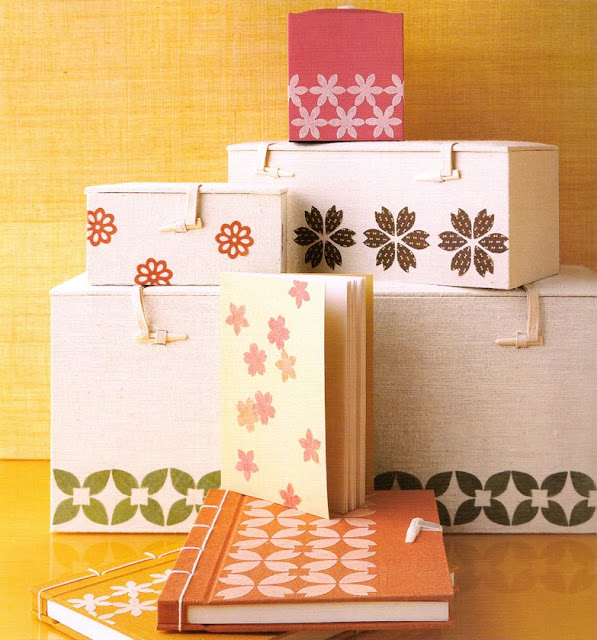 Floral fabric cutouts can also be used to decorate fabric-covered journals and boxes. Punch out the flowers as usual. Lay out your design before beginning to affix the flowers to the object. For a linear pattern, use a grid ruler as a guide to keep your lines straight. Apply the petals or flowers with a glue stick; make sure to cover the back of each shape completely with the adhesive to prevent curling.
How to Punch Fabric Flowers:
1. Lay a piece of fabric in a shallow tray. With a medium paintbrush, apply enough fabric stiffener to saturate, but not soak, the material. Let it dry - about one hour. Repeat with all remaining fabric.
2. Punch out petals and leaves as close together as possible on the fabric using a store-bought floral-shaped punch, available at craft stores. The petals will be stiff enough to work with, layering and manipulating the shapes into three-dimensional creations.
These bouquets of fabric flowers are everlasting and memorable. These ones include pink violets, blue hydrangeas and purple-and-gold panises. To make this project you'll need the fabric, the stiffener, the punch, floral pips, contact cement, floral wire and floral tape, as well as the vessels you plan to place the bouquets in. Punch fabric flowers. Using a micro hole punch, make a hole in the center of each flower. Slip a pip through each hole and secure it with a dab of contact cement. To make a stem, cut a length of floral wire and wrap it around each pip with green floral tape. For leaves, glue flroal wire to each one to create veins and stems. Wrap the stems with floral tape. Gather blooms and leaves into a bouquet and either tuck them into in a vase or wrap the stems with more floral tape to join them, then decorate with fabric ribbon. An array of petals and leaves appears to sprout out from this handmade greeting card. Surprise your mom with a card depicting her favourite flowers. For this project you'll need the basic fabric-punching supplies, cards, a pen, an envelope, white craft glue, ribbon and double-sided glue dots. Punch the fabric flowers and leaves using the decorative punches. Glue just the centers of the leaves and flowers to a card so their tips curl upward a little. Use different colours of fabric and different-shaped flowers to make a vibrant bouquet. Layer the leaves first and place the smallest flowers last, gluing the flowers in place as you work. Draw the stems using a coloured pen or pencil. With a double-sided glue dot, affix a knotted ribbon on top of the stems as a bow.Floral fabric cutouts can also be used to decorate fabric-covered journals and boxes. Punch out the flowers as usual. Lay out your design before beginning to affix the flowers to the object. For a linear pattern, use a grid ruler as a guide to keep your lines straight. Apply the petals or flowers with a glue stick; make sure to cover the back of each shape completely with the adhesive to prevent curling. June's beachy beauty
The June issue of Martha Stewart Living arrived in my mailbox yesterday, and its lean size actually speaks volumes about its breezy content. Beach houses, seaside printing projects and light, airy recipes perfect for those warm days by the water fill this little issue. I had rated last June's issue as the worst of 2008, but this year's June offering is a delight.
 The cover has a fresh, summery vibe - the living room of a Long Island summer home by the sea.
 The bedroom in the same home begs for a 20-minute cat nap between swims.
 The mud room of the house is all set for outdoor play, stocked wtih beach towels and flip-flops.
 My favourite feature is an article on using sea-themed patterns in printing projects for summer. Above, a pink sarong is splashed with starbursts in a darker shade of rose using starfish as the stamping mechanism.
 The starfish pattern is repeated here in blue on a child's white t-shirt.
 Using resin and plastic fish forms, create a wall-mounted aquarium of colourful prints on rice paper.
 Beautiful seashell patterns on an assortment of cool-coloured pillows and cushions lend a nautical touch to this lounge-friendly nook.
 Whether you roll it up and place it in a time-worn glass bottle to be tossed into the ocean, or send them the usual route, your own personal stationery can evoke the feel of a pebbled beach by laying beach stones or shells on paper and spraying the area with watered-down paint in cool shades of blue.
 The cover has a fresh, summery vibe - the living room of a Long Island summer home by the sea.
 The bedroom in the same home begs for a 20-minute cat nap between swims.
 The mud room of the house is all set for outdoor play, stocked wtih beach towels and flip-flops.
  My favourite feature is an article on using sea-themed patterns in printing projects for summer. Above, a pink sarong is splashed with starbursts in a darker shade of rose using starfish as the stamping mechanism.
 The starfish pattern is repeated here in blue on a child's white t-shirt.
 Using resin and plastic fish forms, create a wall-mounted aquarium of colourful prints on rice paper.
 Beautiful seashell patterns on an assortment of cool-coloured pillows and cushions lend a nautical touch to this lounge-friendly nook.
 Whether you roll it up and place it in a time-worn glass bottle to be tossed into the ocean, or send them the usual route, your own personal stationery can evoke the feel of a pebbled beach by laying beach stones or shells on paper and spraying the area with watered-down paint in cool shades of blue.
 Green Entertaining
In the spring issue of Martha Stewart Weddings there is a beautiful spread on green-and-white palettes for spring or summer weddings. What I love about Martha Stewart Weddings, and what I'm sure the editors already realize, is that the content can be so easily applied to any special occasion or larger-scale event: anniversaries, milestone birthdays or graduation dinners. Below are some of the beautiful examples of how the editors took green and white and created an environment of cool, summery elegance.
 The criss-crossed ribbon on the table creates a lovely lattice pattern, evocative of a garden trellice. Ruffled hydrangeas and vibernum look like a hedgerow in this arrangement. Grace Collection glasses and Martha Stewart Wedgwood on the tabletop.
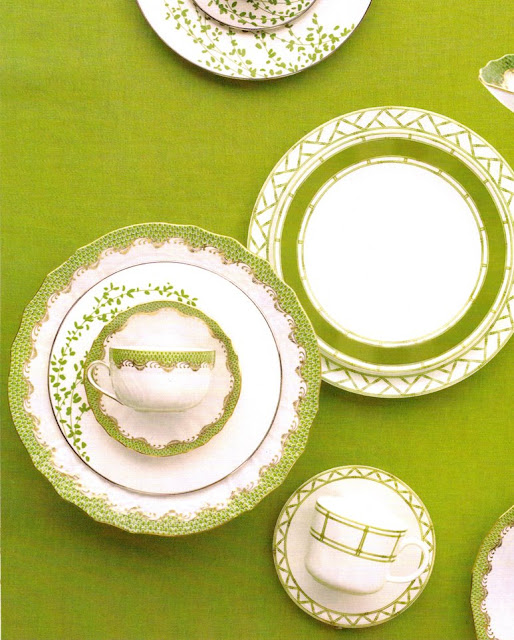 When you choose a single colour to anchor your tablescape, you can blend different china patterns. The natural motifs make these designs even more interchangeable. The bamboo pattern calls to mind a tropical locale, and the abstract leaves are softened by the organic lines of the vines they grow on. A touch of formality comes from the gold-edged and fluted rims of overlapping scales.
 Cuccumber and asparagus sandwiches, made with herbed cream cheese, are the perfect tea-time accompaniment at a spring brunch.
 Send beautiful invitations to your spring party that match the colour scheme of your event-to-be. These are by Kerry Doyle for Minted.com.
 This bouquet was obviously designed for a lucky bride, but placed in a McCoy vase they would be a beautiful addition to a side table or used as a centerpiece. (The white dragon fly is a whimsical touch, available at floraltrims.com.)
 Wedding favours could just as easily be turned into parting gifts for a graduation party or 40th birthday party. The tags come in four different patterns and can be downloaded at marthastewartweddings.com/spring-green-tags.
 The criss-crossed ribbon on the table creates a lovely lattice pattern, evocative of a garden trellice. Ruffled hydrangeas and vibernum look like a hedgerow in this arrangement. Grace Collection glasses and Martha Stewart Wedgwood on the tabletop.
 When you choose a single colour to anchor your tablescape, you can blend different china patterns. The natural motifs make these designs even more interchangeable. The bamboo pattern calls to mind a tropical locale, and the abstract leaves are softened by the organic lines of the vines they grow on. A touch of formality comes from the gold-edged and fluted rims of overlapping scales.
 Cuccumber and asparagus sandwiches, made with herbed cream cheese, are the perfect tea-time accompaniment at a spring brunch.
 Send beautiful invitations to your spring party that match the colour scheme of your event-to-be. These are by Kerry Doyle for Minted.com.
 This bouquet was obviously designed for a lucky bride, but placed in a McCoy vase they would be a beautiful addition to a side table or used as a centerpiece. (The white dragon fly is a whimsical touch, available at floraltrims.com.)
 Wedding favours could just as easily be turned into parting gifts for a graduation party or 40th birthday party. The tags come in four different patterns and can be downloaded at marthastewartweddings.com/spring-green-tags.
5.03.2009
Lawrence Park
Lawrence Park, located in Toronto, just minutes from the downtown core of the city, is the area I call home. One of the deciding factors in choosing to live in this area of the city before I moved was the beautiful surroundings. It's an older, established neighbourhood loaded with charm. Now that it's spring, the park across the street from my apartment is bursting at the seams with blooms and buds. I thought I'd share some of the season's early offerings.
 The entrance to Lawrence Park is lined with a long row of tulips and a small, well-trimmed hedge.
 The tulips are so fragrant and beautiful.
 These tiny blossoms were humming with bees.
 A bank of rhododendrons lines a stone staircase leading to one of many pathways.
 The only one of its kind in the whole park: a towering beauty.
 Holly grows in the park, too - something to remember come Christmas.... (shhhh)
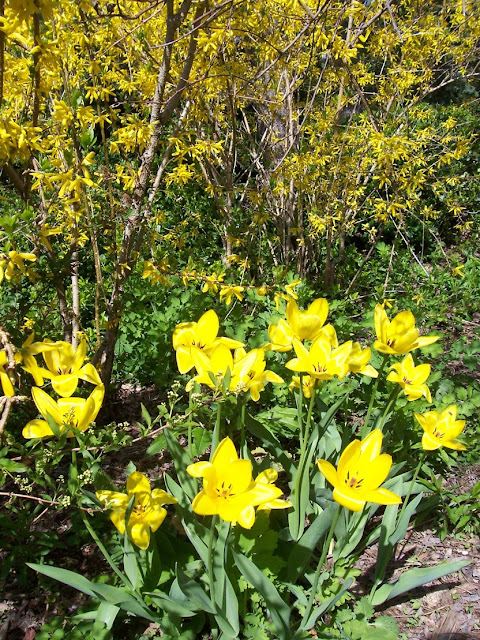 A joyful, yellow vignette of tulips and forsythia.
 This wigela was already packed with blooms.
 A view of the park, which looks lush and inviting.
 At the center of the park is a formal garden that has not yet bloomed. I'm told it will be full of peonies and roses come June and that many newlyweds have their photos taken here.
 The magnolia trees in the nearby neighbourhood wasted little time in blooming.

 Adjacent to the park are several older homes. Many of them are stately, unique examples of modernity. This one above reminds me of an old plantation, yet it's situtated practically downtown - a wonderful contrast of context.
 Nothing says Canada like a house with a moose on the roof! This one is carved out of wood and the owner of the house has it illuminated at night with small spotlights: strange and wonderful.
 The entrance to Lawrence Park is lined with a long row of tulips and a small, well-trimmed hedge.
 The tulips are so fragrant and beautiful.
 These tiny blossoms were humming with bees.
 A bank of rhododendrons lines a stone staircase leading to one of many pathways.
 The only one of its kind in the whole park: a towering beauty.
 Holly grows in the park, too - something to remember come Christmas.... (shhhh)
 A joyful, yellow vignette of tulips and forsythia.
  This wigela was already packed with blooms.
 A view of the park, which looks lush and inviting.
 At the center of the park is a formal garden that has not yet bloomed. I'm told it will be full of peonies and roses come June and that many newlyweds have their photos taken here.
 The magnolia trees in the nearby neighbourhood wasted little time in blooming.
 Adjacent to the park are several older homes. Many of them are stately, unique examples of modernity. This one above reminds me of an old plantation, yet it's situtated practically downtown - a wonderful contrast of context.
 Nothing says Canada like a house with a moose on the roof! This one is carved out of wood and the owner of the house has it illuminated at night with small spotlights: strange and wonderful.
Subscribe to:
Posts (Atom)