Showing posts with label about martha. Show all posts

6.07.2008

About Martha

From the award-winning magazine, Martha Stewart Living, to the bestselling product lines that bear her name, Martha Stewart shares the creative principles and practical ideas that have made her America's most trusted guide to stylish living. Millions of consumers rely on Martha Stewart as their arbiter of style and good taste and their guide to all aspects of everyday living - from cooking and entertaining to decorating and home renovating, and much more.
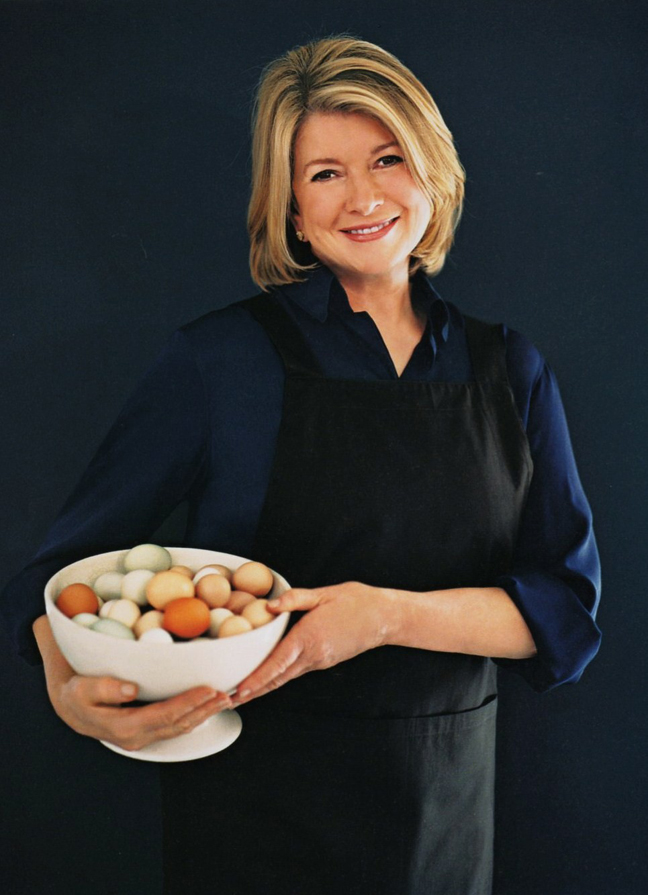
Martha's unique business sense and creative vision form the framework for Martha Stewart Living Omnimedia Incorporated, the company she founded in 1997 and took public in 1999, making her a billionaire. Martha became Chairman and CEO of the eponymous corporation and was also the primary stockholder. The company's expansive, award-winning, multimedia portfolio includes Martha Stewart Living, Martha Stewart Weddings, Everyday Food and Whole Living magazines, the marthastewart.com website,  an Emmy-Award-winning television show (The Martha Stewart Show) Martha Stewart Living Radio on SIRIUS Satellite Radio and more than 75 bestselling books published by Clarkson Potter.

In addition to its media properties, MSLO offers high-quality Martha Stewart products, including the Martha Stewart Collection of home products at Macy's, Martha Stewart Crafts products with EK Success at Michael's and independent retailers, Martha Stewart floor designs with Flor, Martha Stewart homes with KB Homes and much more.

In April, 2008, Emeril Legasse joined the Martha Stewart family of brands; MSLO acquired the assets related to Legasse's media and merchandising businesses, including television programming, cookbooks, emerils.com website and his licensed kitchen and food products.

Martha is also founder of the Martha Stewart Foundation, a charity organization that functions primarily to assist women achieve their entrepreneurial dreams as well as fund geriatric research and lifestyle improvement for the elderly. She is founder of the Martha Stewart Center for Living at Mount Sinai Hospital in Manhattan. The center is an outpatient facility for geriatric medicine, providing clinical care and education for patients, offering training for physicians and coordinating healthy-aging research and practices. Martha was inspired to create the center by her mother, Martha Kostyra, who remained active and engaged in life to the age of 93.

MARTHA'S PERSONAL LIFE:
Martha Helen Kostyra was born in Jersey City, New Jersey, on August 3, 1941 to parents Edward and Martha Kostyra. She is the second child in a family of six children: older brother Erik and younger siblings Kathy, George, Frank and Laura. Martha grew up in the New Jersey suburb of Nutley in a modest three-bedroom house on Elm Place. She credits her parents with teaching her most of what she considers today to be life's most essential lessons, although she was an excellent student at school as well, joining numerous clubs and extra-curricular activities.
She began modelling as a teenager for several publications and department stores, and even starred in a television commercial for Life Buoy Soap. She won a partial scholarship to study art and architectural history at Barnard College in New York City.

She married Andrew (Andy) Stewart, a young law student, on July 1, 1961 - the same year she was named by Glamour magazine as one of America's ten "Best Dressed College Girls." Martha took a year off school and continued to model while Andy finished his law degree at Yale. In 1963 she returned to college to finish her degree and in 1964 gave birth to her first and only child - her daughter, Alexis Stewart.

In 1967 Martha began a career as a stockbroker, working for the firm Monness, Horstman, Williams, and Sidel and became one of the highest-paid and most successful women in the business at the time, earning a salary well over $100,000. Her days as a stockbroker were short lived, however, and only six years later Martha left the business to become a full-time mother and homemaker. By this time, the young family had moved to Westport, Connecticut, where they had purchased a run-down 1805 farmhouse on Turkey Hill Road, which they painstakingly restored.
In 1976 Martha started a catering business in her basement with a friend from her modeling days, Norma Collier. The venture, which was called "An Uncatered Affair", quickly became successful. Norma eventually left the company and Martha bought out her portion of the business and continued to be successful on her own. Martha was also hired as the manager of a gourmet food store, The Market Basket, at the Common Market which she transformed into a booming success.

Meanwhile, Martha's husband had become the president of prominent New York City publisher Harry N. Abrams, Inc. In 1977, Andy Stewart was responsible for releasing the English-language edition of The Secret Book of Gnomes series, by Dutch authors Wil Huygen and Rien Poortvliet, which quickly became a success and a New York Times Best Seller. Andy Stewart contracted Martha's company to cater the book release party, where she was introduced to Alan Mirken, the head of Crown Publishing Group. Mirken was impressed by Martha's talent and later contacted her to develop a cookbook featuring recipes and photos from the parties that Martha was hosting. The result was Entertaining, a lavish, fully-illustrated coffee table book ghostwritten by long-time fashion maven Elizabeth Hawes.

From there, word of her skills and business grew rapidly. Entertaining became a New York Times Best Seller, and eventually became the best selling cookbook since Julia Child and Simone Beck's Mastering the Art of French Cooking, released two decades earlier.

Following Entertaining's success Martha released many more books under the Clarkson Potter publishing imprint, including Martha Stewart's Quick Cook (1983), Martha Stewart's Hors D'oeuvres (1984), Martha Stewart's Pies & Tarts (1985), Weddings (1987), The Wedding Planner (1988), Martha Stewart's Quick Cook Menus (1988), Martha Stewart's Christmas (1989), and many others. During this time she also authored dozens of newspaper columns, magazine articles and other pieces on homemaking. In 1987 she became a spokeswoman for Kmart and developed a new line of Martha Stewart housewares for the retailer, called Martha Stewart Everyday. Martha initially lent only her name and face to the brand, but quickly began to lead the design and style of the merchandise, putting her uncompromising standards and excellent taste to good use. She made numerous television appearances on Kmart commercials and starred in several cooking, entertaining, restoration and holiday specials for PBS that she produced with a colleague. She was soon a staple on the talkshow circuit, appearing on such shows as The Oprah Winfrey Show, David Letterman and Larry King Live. She separated from her husband in 1989 and later divorced, a painful period in her life, which she says she still regrets. 
In 1990 she signed with Time Publishing Ventures to develop a new magazine, Martha Stewart Living, for which she served as editor in chief. The first issue was released in late 1990 with an initial rate base of 250,000. Circulation would peak in 2002 at more than 2 million. In 1993, she began a weekly half-hour service program based on her magazine, which was quickly expanded to a full hour, and later to a daily format, with half-hour episodes on weekends. The syndicated program, also called Martha Stewart Living, won nine Emmy Awards in its 11 years on the air and was nominated for 22 others. Martha also became a frequent contributor to CBS's The Early Show, and starred in several prime time holiday specials on the CBS network.

On the cover of their May 1995 issue, New York Magazine declared Martha "the definitive American woman of our time." But in 2004 Martha served five months prison time after being found guilty on four criminal counts related to a lengthy and much-publicized insider-trading investigation. She also served five months of house arrest and had to pay a fine. She also had to step down as Chairman and CEO of the company she founded. Martha appealed the conviction but lost. She maintains to this day, however, that the conviction was a wrongful one and says that she is innocent. After her prison stint, Martha was temporarily  barred from serving as an officer of her company by the SEC. Today, however, she is back on the board of directors and is still very much involved in the direction and management of MSLO. 
She resurrected her presence by starring in two new television series, both produced by Mark Burnett: a daily live program called The Martha Stewart Show and The Apprentice: Martha Stewart, a primetime adjunct to Donald Trump's hit reality series. Martha currently has four residences (three in New York State and one in Maine) and she continues to contribute her ideas and vision to her company and its many ventures.

PHOTO GALLERY: MARTHA THROUGH THE AGES


3.03.2007

Omnimedia: A History of Martha's Company

The trajectory of Martha Stewart's eponymous company spans an arc of nearly 50 years, beginning with a homegrown catering business in the late 1970s that eventually blossomed into a global brand, winding through the worlds of publishing, broadcasting, retail, and e-commerce. 

Once a publicly-traded company on the NASDAQ, Martha Stewart Living Omnimedia is now under brand management with Marquee Brands, with multiple divisions promoting primarily product creation, licensing agreements and new brand partnerships and alliances. Her book publishing contract with Clarkson Potter is still intact, although her magazine (Martha Stewart Living) ceased publication in May, 2022, after its owners, Dotdash, shuttered it. Recent television programs with PBS and Roku, including Martha Stewart's Cooking School, Martha Bakes, Martha Gardens, Martha Holidays and Martha Cooks are still being streamed on Roku and Amazon Prime. Her former television program, Martha Stewart Living, can also be streamed on Roku and Amazon Prime, as well as through the Martha Stewart TV app. 

The long history of how Martha's company came to be is worth exploring. Her success in business is considered to be one of the best examples of entrepreneurial excellence in modern history. Below you'll find a fairly detailed synopsis of the development of Martha Stewart Living Omnimedia throughout the decades.

AUSPICIOUS BEGINNINGS

Martha Stewart Living Omnimedia, Inc. (MSLO) encompasses the varied publishing, broadcasting, and merchandising enterprises of its founder, Martha Stewart. The beginnings of the business can be traced to Stewart's activities in the late 1970s when she was working as a caterer and subsequently as a cookbook and lifestyle author. Stewart's formal education consisted of a bachelor's degree in history and architecture from Barnard College, and, following limited success as a model and a stockbroker, she decided to make a career out of her passion for food preparation and presentation. In 1976 Stewart founded her own business, a catering operation called "An Uncatered Affair" headquartered in the basement of the historic farmhouse she lived in with her husband and daughter in Westport, Connecticut, known as Turkey Hill.
The catering business became extremely successful. Martha's clients ranged from museums and art galleries to wealthy socialites and business moguls along the Eastern Seaboard. She quickly became highly connected and well-known. At this time, Martha was also contributing articles about food and entertaining to local New York publications and national magazines, such as House Beautiful and Good Housekeeping. She was also hoping to expand her expertise in food preparation and party planning into a book on the subject. 

In 1980 she forged an agreement to write such a book for Crown Publishing, a division of Random House, after a fortuitous meeting with publishing executive Alan Mirkin. Stewart reportedly had to fight for the lavish style she envisioned for the book, which included a multitude of color photographs and the large-sized format of a hardcover coffee-table book. Published in 1982, "Entertaining" helped establish Stewart as an authority on taste and lifestyle and marked the beginning of a new direction for the intrepid entrepreneur. The production of her first book also proved to be a blueprint for how Stewart would build her image as a teacher of home management, do-it-yourself home projects and advice for living a better life. Throughout the 1980s, she continued to author numerous books on home cookery, including "Martha Stewart's Quick Cook", "Martha Stewart's Hors d'Oeuvres", "Martha Stewart's Quick Cook Menus", and "Martha Stewart's Christmas". The books proved to have an enduring shelf life. National book tours and cooking demos introduced Martha to her public and regular appearances on talk shows such as Oprah Winfrey and David Letterman in the late 1980s cemented her image as an expert in the field of house and home.

KMART, TV AND A MAGAZINE

The next step in making Martha Stewart a nationally known brand came in 1987 when Stewart signed a $5-million, five-year consulting contract with Kmart. Stewart was hired to help promote home products for the retailer, including a line of Dutch Boy paint colors and bath and bedding products. Stewart's primary role was to lend her name and style to Kmart's products, to appear in print and television ads, and to make in-store appearances to bolster sales of the retailer's home goods.

Meanwhile, her plans for expanding her publishing endeavors continued at pace. Back in the late 1980s Stewart had pitched an idea for a magazine to the publishing house of Condé Nast. The company's chairman, Si Newhouse, was wary of the idea for Martha Stewart Living, deeming a publication dependent on one person as too risky. Stewart's idea was also turned down by Rupert Murdoch's magazine empire. In 1990, however, Time Inc. approved two test issues of Martha Stewart Living, with the first issue scheduled to come out in November 1990 and the second in March 1991. The public's response was unprecedented and subscriptions poured in. Time committed to publish six issues a year. 

By 1992 Stewart had become dissatisfied with her Kmart consulting job and let the contract lapse, though Kmart continued to sell Martha Stewart towels, bedding, and paints. "I thought they wanted me to make real decisions for them," Stewart told Working Woman in 1995 about the Kmart deal, "but it turns out I was really hired as a personality, not a consultant. They acted on nothing I proposed." While the Kmart venture may not have materialized as planned, Stewart's publishing career ramped into high gear. By 1995 there were more than four million copies of her books in print, her magazine was selling over a million copies per issue (now publishing 10 issues a year) and had been voted "Magazine of the Year" by Ad Age. Her nation-wide book tours soon led to paid lecture appearances, which in turn kept Stewart and her products in the public sphere, popularizing her inimitable style.

The magazine spawned several other new enterprises in the early and mid-1990s. Morning television's Today show agreed to fund the production costs of an appearance by Stewart every other week on the program. Stewart appeared at no charge and in return received free publicity for her magazine and books. Time, Inc. also began publishing books that made use of articles from the magazine, grouped according to theme; the first two were titled Holidays and Special Occasions.

Once again ready to expand into new arenas, Stewart convinced Time to fund a television show based on the magazine, also to be called Martha Stewart Living. The weekly show began with Group W Productions and covered home decorating, entertaining, gardening and cooking, and featured Stewart as the host. By 1993 the show was broadcast in 84 percent of the nation's markets.

MARTHA'S NEW COMPANY

New forays in retail and the continued popularity of her magazine led Stewart to renegotiate her relationship with Time. To help with her negotiations, Stewart gathered a team of lawyers and consultants: Allen Grubman, a prominent entertainment lawyer; Sharon Patrick, strategy consultant; and Charlotte Beers, chair and chief executive of Ogilvy & Mather Worldwide. With these three advisers, Stewart persuaded Time to create a subsidiary of Time Warner called Martha Stewart Living Enterprises and to name Stewart chair and chief executive officer of this company. Time provided all of the funds for the company, and Stewart provided the ideas and her name. The new corporation was jointly owned by Time Inc. Ventures, a division of Time Warner Inc., and Martha Stewart, though neither party revealed the percentage of their ownership. The company encompassed Martha Stewart Living magazine, its spin-off books, the new television show, and Stewart's Today Show appearances. Outside the company's purview were the books Stewart had written between 1982 and 1995; the royalties from the sales of Kmart bedding, towels, and paints; and Stewart's lecture fees - revenues from these sources went directly into Martha's pockets. In 1995 Stewart continued to expand her reach with Martha by Mail, a merchandising venture which had begun as an insert in Martha Stewart Living magazine and was expanded into a full direct mail catalogue, selling high-end housewares and garden products directly to her audience. A weekly syndicated newspaper advice column soon emerged (Ask Martha) and a prime-time Christmas special debuted that same year.
By 1996 Martha Stewart Living Enterprises had a staff of 140 and growing sales. Because Time Warner only announced sales figures for its publishing businesses as a whole, the value of the company was difficult to ascertain. Some industry analysts placed its worth at $70 million and estimated annual revenues at $200-million. Stewart began pushing to renegotiate her relationship with Time again just a year after the formation of Martha Stewart Living Enterprises. She wanted a greater equity stake (40 percent) in the company and the power to expand in new directions as the firm flourished.

In 1997 Stewart acquired majority interest in the company and renamed it Martha Stewart Living Omnimedia, L.L.C. With the continued help of Sharon Patrick, Stewart had arranged the purchase of at least 80 percent of the company for about $75 million, although figures varied according to different accounts. Time's remaining stake in the company was generally estimated to be between 5 and 10 percent, with the balance of the stock held by Patrick and key staff members. Martha's separation from Time was reportedly a friendly one. Don Logan, chair and CEO of Time Inc., agreed to join the new board of directors for Martha Stewart Living Omnimedia. Stewart initially appointed Patrick president and chief executive officer, but soon took the helm as CEO, while Patrick remained president and COO. The buyout was financed in large part with new contracts from Kmart and Sherwin-Williams paint.

The new Kmart deal was different than the first in that Martha Stewart Living Omnimedia retained complete control over the entire production process, from product design to packaging to advertising. The newly named Martha Stewart Everyday housewares line went on to become Kmart's best-selling product rollout in the retailer's history. 

With new independence, Martha was free to pursue her vision for the company. Stewart led a rapid and varied expansion of Martha Stewart Living Omnimedia in 1997 and early 1998. The Martha Stewart Living television show moved from a weekly to a daily schedule. The show was distributed by CBS and Stewart soon left her biweekly appearance schedule on NBC's Today Show to appear weekly on the CBS This Morning program. In addition, the company launched a daily 90-second radio feature known as Ask Martha and launched a web site (marthastewart.com) with a wide range of information about the television show, magazine, and Stewart's books, plus educational and how-to content not found in any of her other offerings. The site also highlighted items from the Martha by Mail catalogue and allowed users to order products online.

Near the end of 1997 the company completed construction on a new $4 million studio in Westport, Connecticut, for taping Stewart's television and radio shows with large kitchens and state-of-the-art equipment. Circulation of Martha Stewart Living magazine had grown to 2.3 million for 1997, 30 percent higher than 1996. Total year-end revenues for 1997 came to $132.8 million, with earnings of $13.9 million.

In early 1998 the company's new and established ventures were going strong. The Ask Martha newspaper column was syndicated in 212 papers in the U.S. and Canada, and the radio program was broadcast on 135 stations across North America. The Martha Stewart Living television show had top ratings and was offered on 197 stations across the nation, winning numerous Emmy Awards for excellence in production. 

Though Stewart had talked about taking the company public since gaining ownership, she became more serious about the issue in 1998. Market analysts debated whether the company had the ability to stand on its own. Linda R. Killian, an analyst and portfolio manager with the Renaissance Capital Corporation, commented to the New York Times, "If Martha Stewart got hit by a cab tomorrow, to what extent is there a viable company there?" Others questioned whether profits would be hurt by continued expansion. Stewart, herself, expressed total confidence in the independence of her company to the New York Times: "It won't die without me. I think we are now spread very nicely over an area where our information can be trusted." Consumers evidently concurred, helping MSLO bring in revenues of $177.2 million for 1998 with net income climbing to $23.8 million.

GOING PUBLIC

Stewart took her road show to Wall Street in October 1999 with an initial public offering of over 8.28 million shares for $18 each. The offering generated funds of more than $132 million and amazed nay-sayers and fans alike. The new firm, Martha Stewart Living Omnimedia, Inc., under the ticker symbol MSO, became a darling of Wall Street and consumers, with stock prices rising as high as $50 a share, making Martha Stewart America's first self-made female billionaire. Martha Stewart Living Omnimedia, Inc. finished its maiden year as a public company with profits topping $229 million and zero debt.

By 2000 Martha Stewart Living magazine's circulation had reached 2.1 million and the homemaking publication went from 10 issues per year to 11, becoming a monthly publication the following year. Its sibling publication, Martha Stewart Weddings, which had debuted in 1994, had gone from an annual publication to biannual and then quarterly. Other special interest magazines had also joined the ranks, including Martha Stewart Baby and several periodical special-interest issues, such as Clotheskeeping and Holidays. A new quarterly magazine for families, called Martha Stewart Kids (later changed to Kids: Fun Stuff to Do Together) was published in July 2001, filled with recipes, crafts, and games for kids aged three to ten.

Stewart also expanded further into home furnishings through a deal with Bernhardt Furniture Company for a Martha Stewart Signature collection in 2001, the same year MSLO signed with Japan's Seiyu, a retail chain of more than 200 stores. Seiyu was slated to carry a broad range of Stewart branded products, while the two companies were to collaborate on a new magazine called Martha, published in Japanese. A new Martha Stewart Store opened in the chic Yurakucho district of Tokyo, exclusively selling Martha Stewart branded merchandise.

The original Martha Stewart logo, on the left, was featured prominently on the upper-left corner of the magazine for more than a decade. In 2004, it was removed. By 2006, the logo had been redesigned by Doyle Partners design firm in a circular form.

A BUMP IN THE ROAD

A legal scandal in 2001 involving a federal indictment related to an ill-timed stock sale profoundly changed the company’s high profile trajectory as well as the image of its founder. As the case gained momentum, it became clear Stewart would face criminal charges, although not for the initial allegations of insider trading. While many called the investigation a witch hunt, few believed Stewart would ever face trial. 

By 2002 Stewart was in the middle of a legal and media maelstrom. Federal prosecutors suspected not only wrongdoing but a Wall Street coverup as well. With all the publicity affecting MSLO, Stewart cut back her involvement as the company began showing signs of the strain by the middle of the year. Consumer confidence in Stewart teetered despite her protestations of innocence; by the third quarter earnings had fallen and stock value was down by more than half. The end of the year brought revenues of a relatively strong $295 million, but income of only $7.3 million.

Ad revenues in her magazines were down by 50% and newsstand sales began to decline substantially, even though subscriber loyalty remained consistent. Kids magazine folded during this period and in light of the highly-publicized trial and ongoing legal woes, the television show was also cancelled.

By the time Stewart was indicted in July and went on trial in 2003, she had resigned as chief executive and chair of her company, serving as a "creative officer” of the board. Revenues for the troubled year had fallen to $245.8 million and the company suffered its first ever annual loss of $2.7 million. 

Stewart's five-week trial ended in March 2004 when she was convicted on charges related to conspiracy and obstruction. She was fined $30,000, sentenced to five months each of prison time and home confinement, and two years probation. She served her prison time from October 2004 to March 2005 at the federal penitentiary for women in Alderson, West Virginia. After her release, she served the remaining five months at her home in upstate New York and was forced to wear an electronic monitoring device on her ankle. She was allowed to leave her estate for up to 48 hours per week while under house arrest.

MOVING ON:

 In 2005 as Stewart returned to work, she was welcomed back by many of her colleagues and loyal customers. In her absence, friend and stockholder Sharon Patrick had taken the helm but stepped down in late 2004, replaced by Susan Lyne, a former television executive, as CEO and president. With Stewart still under a cloud due to a Securities and Exchange Commission lawsuit related to her criminal conviction, she was unable to lead the company in any significant way. (Her shares had been put in the control of her daughter Alexis while she was in prison.) Stewart was, however, front and center in several new television deals, two of which paired her with Survivor and Apprentice producer Mark Burnett. A new daily, syndicated, live talk show called The Martha Stewart Show debuted in September of 2006, featuring celebrity guests who joined Martha on her new television set in Chelsea to cook and do crafts. That same fall, a prime-time spinoff of the popular Apprentice reality show, founded and hosted by Donald Trump, called Apprentice: Martha Stewart debuted to mixed reviews. Martha was, once again, everywhere!

Other new ventures included a deal with Sirius satellite radio for a Martha Stewart Living radio program, and the cable television Style Network acquiring the rights to run previously-aired episodes of the Emmy-winning Martha Stewart Living twice daily along with a few newly produced specials. By the middle of 2005 both Stewart and her company were regaining lost confidence and making strides in all of MSLO's business segments. The television, publishing, merchandising, and Internet/direct commerce divisions were touting new products and partnerships, including a lucrative multi-year deal with Macy's department stores, which sold over a thousand new skus bearing the Martha Stewart moniker, from towels and sheets to cookware and household goods, replacing Kmart as the primary destination for Martha Stewart housewares. Though Stewart's legal problems were not over, she was more than ready to move forward and to once again make her empire "a good thing."

UNDER A NEW UMBRELLA

Between 2007 and 2015, the company began to show signs of financial strain due to over-extension. It could no longer afford to maintain many of its operations and losses were routinely reported. Finally, in 2015, Martha Stewart Living Omnimedia ceased trading as a public company and was sold to Sequential Brands, while its magazine operations were sold to Meredith Corporation. It wasn't long, however, before Sequential sold the Martha Stewart brand to Marquee Brands in 2019, which is now currently overseeing its operations. In 2022, Meredith was purchased by Dotdash Media and in the transition of ownership, Martha Stewart Living magazine was shuttered.

In its current form as a privately-owned and operated company (primarily focused on retail, publishing and license agreements) under new management at Marquee, the Martha Stewart brand still maintains a stronghold in the realms of home and lifestyle. Internationally recognized and respected, the Martha Stewart name still speaks to good design for good value. With a library of more than 100 bestselling books on cooking and lifestyle topics and a broadcasting archive of thousands of hours of award-winning television and radio programing, few can compete.